
Beware Room 480
The KGB was very much at home in the Metropol hotel

Since its opening in 1905 the Metropol Hotel has played many roles in Russian history – first as a setting for the super-rich to flaunt their wealth in the final days of Tsardom, then, after the 1917 Revolution, as a malodorous doss house for homeless Bolsheviks. In the 1930s it was restored as a luxury hotel where foreign dignitaries and journalists were taught to embrace Soviet socialism. After the war, it clung on to its reputation as the best of a bad bunch of Moscow hotels: with the right connections, you could secure a table in the dining room and spend an evening dancing around the fountain.
Today I want to tell you about the hotel’s best-kept secret. It was the venue of choice for KGB operatives playing the role of ‘good cop’. The site for interrogations by ‘bad cops’ was of course the Lubyanka, the notorious headquarters of the security police from Soviet times until today. It is a five-minute walk from the hotel.
In 1974, the dissident Soviet writer Vladimir Voinovich described what happened when the secret police invited him to the Metropol. A year earlier, Voinovich’s satire of the Soviet Union, The Life and Extraordinary Adventures of Private Ivan Chonkin, had been published abroad. Chonkin is a simple Red Army soldier, a holy fool who outwits the Communist Party, the army, and the secret police.
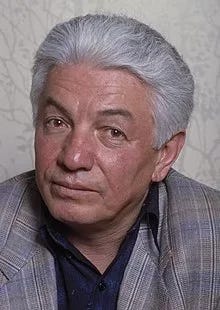
The Soviet Writers Union expelled Voinovich for allowing his ‘anti-Soviet’ book to be published abroad, meaning he could no longer publish any of his work in the USSR.
Voinovich was summoned to the Lubyanka to discuss his future as a writer. He went without protest: he had more respect for the KGB, which was running the USSR at the time, than to the time-serving yes-men of the Writers Union. Across the table in the Lubyanka were two KGB operatives who gave their names as the patently false ‘Petrov’ and ‘Zakharov’.
The KGB men clearly thought they had a chance to ‘turn’ a dissident, and invited him to meet them again a week later in the more congenial surroundings of the Metropol. What happened then was as absurd as anything experienced by Private Chonkin.
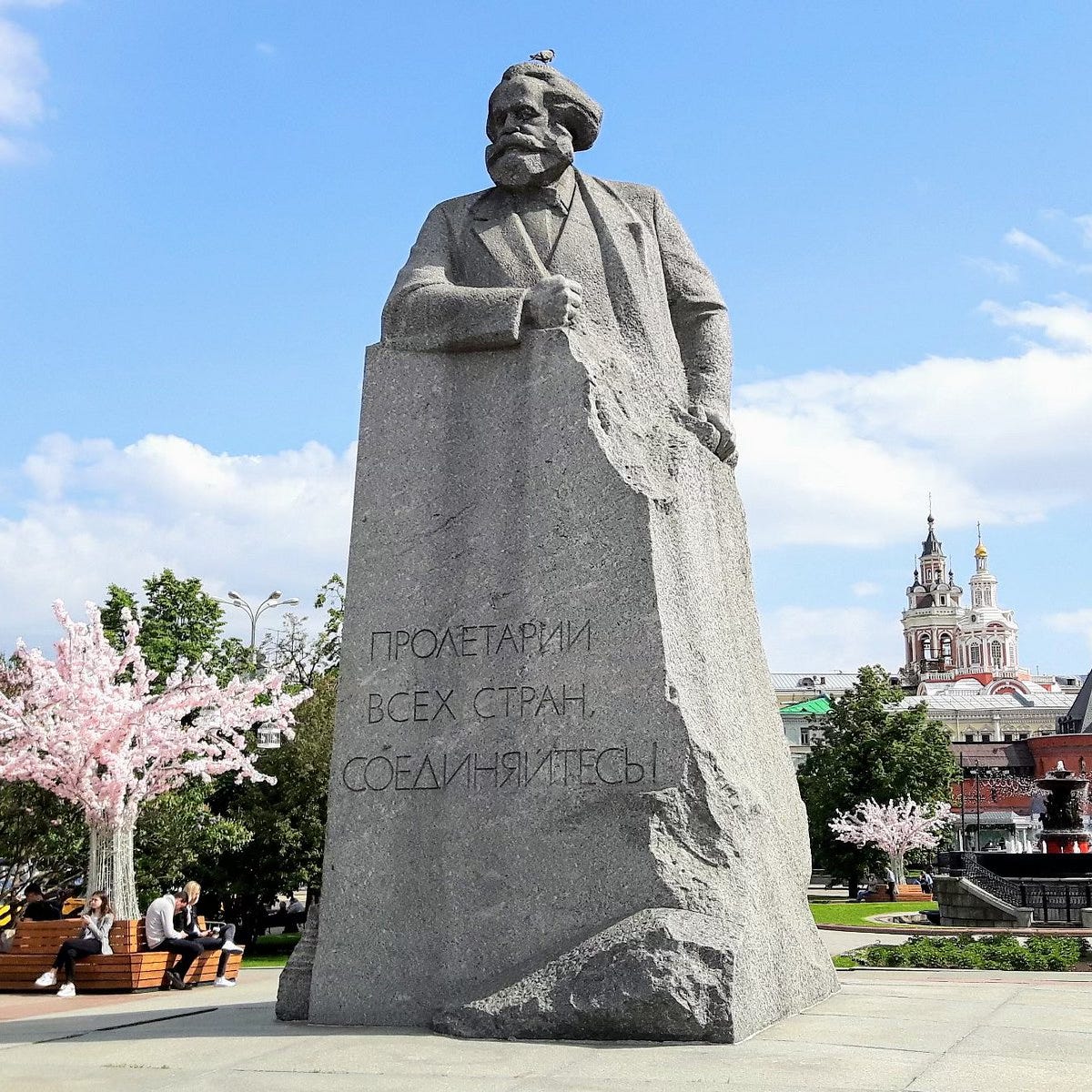
Voinovich was told to meet his KGB contacts outside the hotel, by the statue of Marx, at 6pm. When Voinovich arrived at the statue three minutes before the agreed time, he noticed some strange goings on.
‘My new acquaintances were for some reason running to and fro and making mysterious signs to some unknown people. It seemed as if an important operation was being prepared. When he bumped into me, ‘Zakharov’, the younger of my guardians, seemed to be embarrassed; he took me by the hand but suddenly let go and ran round the corner supposedly in search of ‘Petrov’, who, as it happened, was approaching from a completely different direction.’
After they had stopped running round in circles, they escorted Voinovich into the hotel, and up to room 480.
Voinovich suggested that the KGB authorise the publication of a selection of his works to mark his rehabilitation as a Soviet writer in good standing.
‘They promised to do this in the near future, but meanwhile asked me to tell them more about my friends and to provide their names. At the same time, they informed me several times that they knew all about me, but I realized that they knew nothing apart from my open conversations on the telephone.’ (His phone was disconnected shortly thereafter).
As ‘Zakharov’ was assuring Voinovich that he was one of his favourite writers, the author could not help noticing something dangling from his sleeve – clearly a microphone. ‘Zakharov’ pulled his arm back and said: ‘What difference does it make to you where the microphone is, in my sleeve or in the wall?’
At this point Voinovich believed the KGB tried out another weapon from its technical arsenal. He became confused, which could only be the result of the use of some gas or other substance to disorient the suspect. The gas affected the KGB men even more strongly, and ‘Petrov’ began babbling nonsense.
When the three men recovered their senses, ‘Petrov’ was no longer the good cop and issued a veiled threat to liquidate him. ‘A man’s life is a very uncertain thing,’ he said, ‘but to end it at the age of 43 …’ He spread out his hands in bewilderment.
Voinovich recorded his Metropol experience in an open letter to the KGB chief Yuri Andropov, who would become leader of the Soviet Union in 1982 when he was already dying of kidney failure. The author warned Andropov: ‘I am not afraid of threats, Yuri Vladimirovich. My soldier Chonkin will avenge me.’
The text of this letter can be found in the online version of the Chronicle of Current Events , a Soviet dissident publication that circulated clandestinely from 1968-1983.
During the15 years it was published, the text was typed out by a volunteer in five carbon copies which were distributed to other free spirits who would type out further carbon copies. Thus news that the state wanted to suppress was circulated. It is no exaggeration to say that the clandestine work of these often-neglected human rights defenders paved the way for the reforms initiated by Mikhail Gorbachev. For more on the Chronicle, read this Wikipedia entry.
The Chronicle archive is available online thanks to a decade of work by John Crowfoot who over a decade of editing has turned thousands of typescript pages into a consistent text.
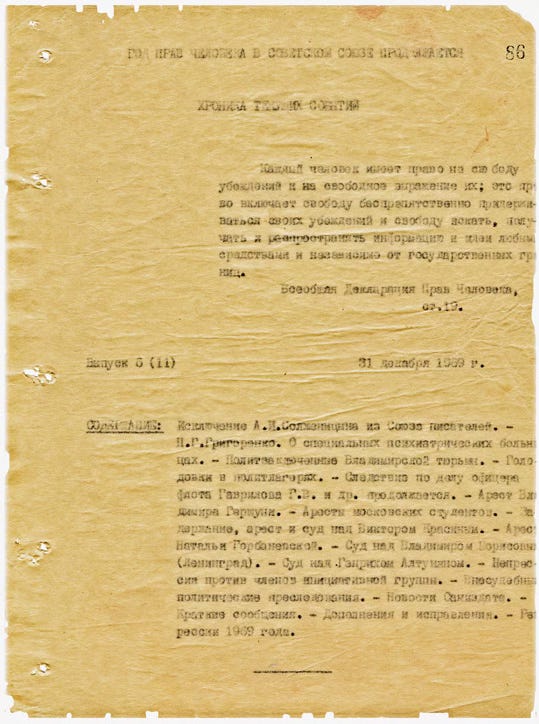
John, who drew my attention to Voinovich’s open letter, has his own story about the Metropol.
While he was living in the Soviet Union, his Russian girlfriend was summoned to the Metropol to be grilled on her contacts with foreigners. She duly went to meet a KGB operative by the statue of Marx, but she declined his offer to enter the hotel, insisting she preferred to sit on a bench outside.
The KGB man was wearing no more than a suit and it was late autumn; by the time he gave up trying to recruit her, he was shivering all over. Thus she escaped a brush with KGB wrist microphones and nerve gases. But such behaviour did not go unpunished: she lost her job a Moscow News.
Alan Philps’s book about the Metropol Hotel, ‘The Red Hotel: The Untold Story of Stalin’s Propaganda War’, is now in paperback in the UK and the USA